Jane Austen Unscripted Genre Play Workshop
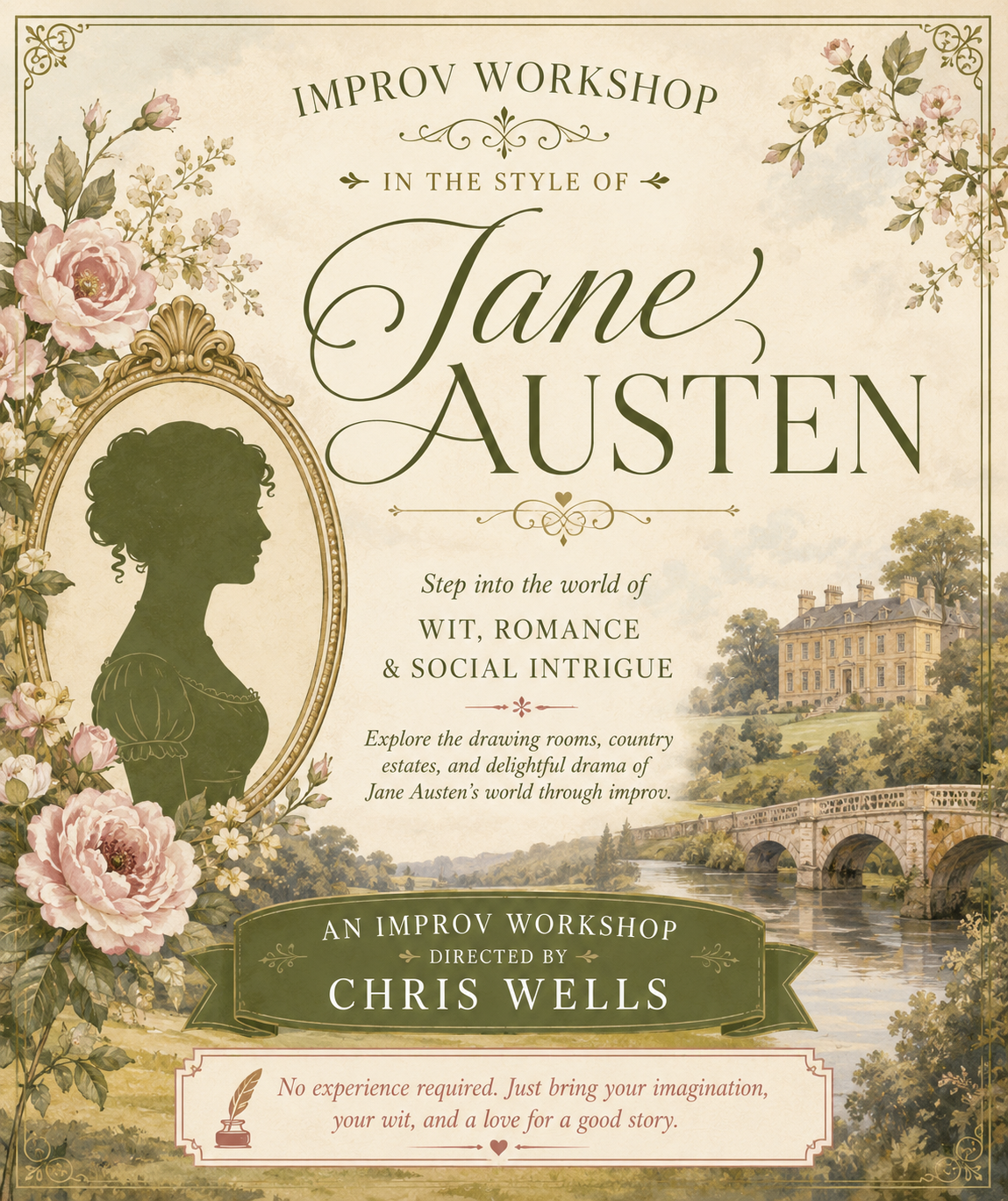
Jane Austen Unscripted
A Guide to Regency Society, Values, and Themes
The World of Jane Austen (England, 1811–1817)
Austen’s stories take place among the landed gentry—families wealthy enough not to work for a living, but not necessarily titled nobility. Society is highly structured, reputation matters enormously, and marriage is often the most important decision of a person’s life.
Characters rarely fight wars, solve murders, or save kingdoms. Instead, the drama comes from:
Love versus duty
Pride versus humility
Appearance versus reality
Personal happiness versus social expectations
Money, inheritance, and status
-
How to behave should you be transported back to Jane Austen’s time.
Regency Social RulesIntroduction Matters
Proper ladies and gentlemen generally do not speak freely with strangers. Introductions create social permission.
Improper: “Good afternoon, stranger. Tell me about yourself.”
Proper: “Mrs. Grant, may I present Mr. Fletcher?”
Reputation Is Everything
A person’s standing can rise or fall through gossip, scandal, rudeness, or imprudent behavior.
Characters constantly consider:
“What will people think?”
“How will this affect the family?”
“Is this proper?”
Marriage Is Serious Business
Marriage combines:
Affection
Financial security
Family alliances
Social advancement
Love is valued, but practical concerns are impossible to ignore.
Emotional Restraint
People rarely say exactly what they feel.
Instead of:
“I love you.”
They might say:
“Your happiness has become of great importance to me.”
Subtext is often more important than text.
Civility Is Mandatory
Even enemies are polite.
Characters insult each other through:
Backhanded compliments
Excessive praise
Strategic omissions
Perfect manners delivered coldly
A cutting Austenian insult should sound pleasant on the surface.
Common Social Settings
Country house visits
Balls and dances
Tea calls
Walks in the countryside
Dinner parties
Musical evenings
Picnics
Shopping in town
Reading letters
Family drawing rooms
Many important scenes occur simply because two people happen to meet during a walk.
-
The kind of people you’d meet at a social event.
Essential Austen Archetypes- Women1. The Clever Heroine — Intelligent, observant, witty, and quietly resistant to foolish social expectations.
2. The Sensible Elder Sister — Calm, responsible, emotionally restrained, and often carrying the burden of family stability.
3. The Romantic Idealist — Believes deeply in true love and emotional sincerity, often to a fault.
4. The Spirited Rebel — Speaks too freely, questions convention, and resists being controlled.
5. The Spoiled Younger Girl — Impulsive, flirtatious, attention-seeking, and socially reckless.
6. The Matchmaking Busybody — Interferes enthusiastically in other people’s romantic affairs.
7. The Foolish Mother — Dramatic, anxious, socially obsessed, and lacking self-awareness.
8. The Practical Survivor — Understands the economic realities of marriage and security.
9. The Sharp-Tongued Aunt — Judgmental, intimidating, socially powerful, and often brutally perceptive.
10. The Social Climber — Obsessed with status, advantageous marriages, and improving family rank.
Essential Austen Archetypes - Men
1. The Reserved Gentleman — Intelligent and honorable, but emotionally guarded and difficult to read.
2. The Charming Rogue — Attractive, charismatic, and socially skilled, but morally unreliable.
3. The Earnest Suitor — Deeply sincere and devoted, though sometimes awkward or overly intense.
4. The Proud Aristocrat — Possesses status and refinement, but struggles with arrogance and entitlement.
5. The Hypocritical Moralist — Preaches propriety and virtue while masking selfishness or vanity.
6. The Military Officer — Charming, confident, fashionable, and socially admired.
7. The Affable Fool — Pleasant and agreeable, but shallow, weak-minded, or easily led.
8. The Wealthy Landowner — Conscious of class, duty, inheritance, and family reputation.
9. The Gentle Country Gentleman — Modest, practical, hospitable, and happiest away from fashionable society.
10. The Fortune Hunter — Pursues romance primarily for wealth, status, or financial security.
-
Young Ladies
A suitable marriage
Independence
Respect
Security
Genuine affection
Gentlemen
A worthy spouse
Family approval
Preservation of reputation
Responsible management of property
Parents and Relations
Good matches
Family advancement
Financial stability
Avoidance of scandal
-
First Impressions Are Often Wrong
People misjudge others constantly.
The proud man may be kind.
The charming man may be selfish.
The quiet woman may be the wisest person in the room.Character Matters More Than Status
Wealth and rank are attractive, but Austen ultimately rewards:
Kindness
Integrity
Self-awareness
Growth
People Must Change
Most protagonists begin with a flaw:
Pride
Vanity
Naivety
Prejudice
Excessive reserve
The story is often about recognizing and correcting that flaw.
Love Requires Understanding
True romance emerges when two people see one another clearly, flaws included.
Useful Questions for Any Scene
What does my character want?
What social rule prevents them from getting it?
What emotion are they hiding?
What assumption are they making that may be wrong?
What would happen if society discovered their secret?
The Austen Formula
A misunderstanding creates an obstacle.
Pride, prejudice, vanity, or fear make it worse.
Characters learn something about themselves.
Truth is revealed.
Affection and good sense triumph.Or, as Austen might suggest:
Happiness belongs not to the richest or most beautiful, but to those who learn to see themselves and others clearly.